
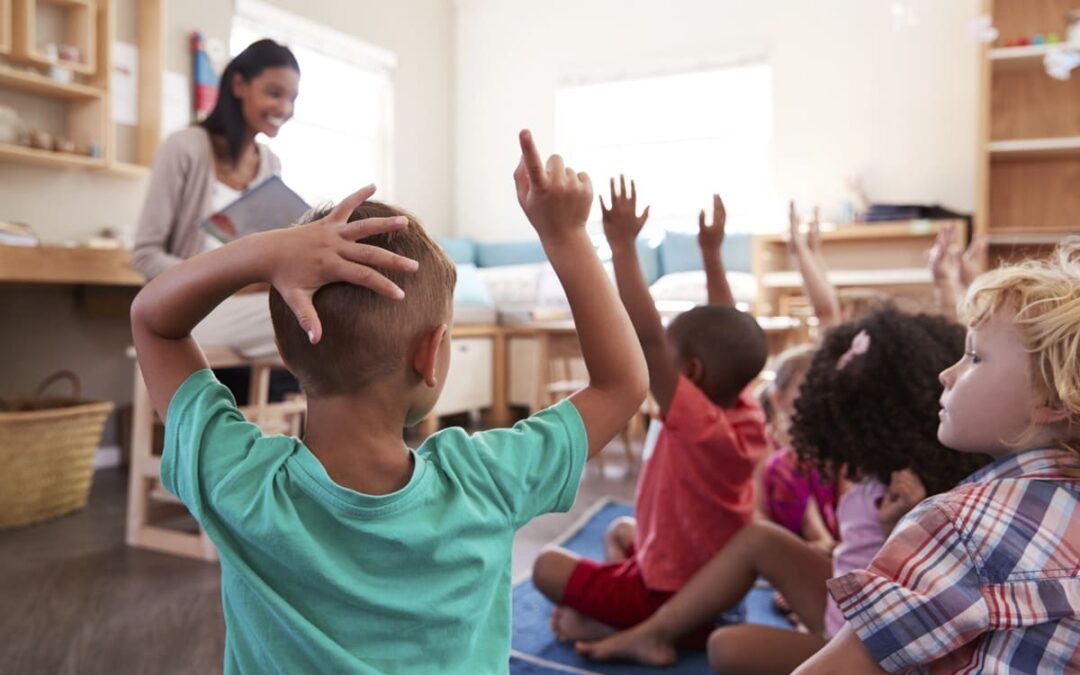
Kindergarten is not simply a transitional phase between home and formal schooling; it is the foundation upon which lifelong learning, behavior, and emotional resilience are built.
Experiences in early life have a substantial impact on social skills, academic trajectories, and cognitive development far into adulthood, according to decades of educational study. Knowing what really constitutes a top-notch kindergarten setting is a strategic and useful choice for parents looking into international schools in Ajman or contrasting the best and top schools in Ajman.
Based on facts, industry insights, and internationally recognised early education standards, this essay explores the essential components that make a kindergarten setting safe, caring, and truly effective.
Quality Framework
What Makes a Kindergarten Truly Effective?
A strong kindergarten environment is not defined by one single factor. It is built through safety, relationships, curriculum quality, skilled teachers, and meaningful assessment.
Safety
The Multifaceted Framework of Safety
Sometimes, the word “kindergarten safety” is misunderstood as being exclusively physical. Although having a safe infrastructure is crucial, real safety is a psychological, emotional, and bodily experience.
Physical Safety
In terms of physical aspects, worldwide early childhood benchmarks emphasize the importance of age-appropriate classroom design, non-toxic materials, ergonomic furniture, and impact-absorbing play surfaces. Schools that make significant investments in careful spatial planning and continuous adult supervision have significantly lower injury rates, according to research on early learning environments. Reducing absenteeism and improving overall well-being also requires organized housekeeping standards and child-friendly health measures.
Emotional Security
Emotional security is as crucial. When their caregivers offer them emotional stability, empathy, and support, young children thrive. More participation, less anxiety, and more self-regulation are commonly linked to emotionally responsive schools. Children who experience psychological safety are more confident and intrinsically motivated because they may try new things, make errors, and express themselves without fear.
Instead of viewing safety as a checkbox, many of Ajman’s best schools set themselves apart by integrating it into daily operations, teacher preparation, and school culture.
Relationships
Nurturing via Human Interaction
Relationships, rather than infrastructure, are what constitute a caring kindergarten setting. Learning results are directly and quantitatively impacted by the calibre of interactions among teachers, students, and families.
Educator–Child Relationships
Children who have warm, responsive interactions in kindergarten show better language development and social skills later in life, according to longitudinal research in early education. Children feel appreciated and inspired in classrooms where teachers actively listen, affirm feelings, and scaffold thinking.
Collaboration between Families and Schools
Parents are positioned as collaborators in successful kindergartens. Initiatives for inclusive involvement, developmental feedback, and transparent communication facilitate the integration of home and school learning. This consistency strengthens learning behaviours and improves emotional security.
Interaction among Peers
Empathy, cooperation, and conflict resolution are fostered by structured play and group activities. Peer interaction also promotes early global awareness and inclusivity in culturally diverse learning environments, which are typical in international schools in Ajman.
Therefore, connections that are purposeful, dependable, and developmentally appropriate are characteristics of a caring environment.
Curriculum
Curriculum Design: When Purpose and Play Collide
Exploration and structure are balanced in an effective kindergarten. High-quality programmes, in contrast to antiquated beliefs, are strategically play-based rather than unduly intellectual or unstructured.
- Play-based learning improves cognitive flexibility, language acquisition, and problem-solving abilities, according to educational research.
- Without formal pressure, activities like role play, storytelling, construction play, and sensory exploration incorporate fundamental principles in science, literacy, and numeracy.
- Effective kindergartens also have well-defined developmental objectives.
- International standards-aligned curriculum frameworks guarantee that students advance in the social, emotional, physical, and cognitive domains.
- In order to foster curiosity, creativity, and logical thinking in children from an early age, many progressive programs also use hands-on inquiry to introduce early STEAM ideas.
Rather than depending only on reputation, parents evaluating the top schools in Ajman frequently discover that excellent kindergarten programs explicitly state their educational approach and learning objectives.
Teaching Quality
The Function of Skilled and Versatile Teachers
The most important determinant of early childhood quality is still teacher expertise. The success of a kindergarten ultimately depends on its teachers, regardless of its facilities or curriculum.
Ongoing Professional Development
With an emphasis on inclusive education, classroom observation methods, and child psychology.
Lower Student-Teacher Ratios
Research indicates that better language development and fewer behavioural issues are associated with lower student-teacher ratios.
Child-Centered Teaching Strategies
That adjust to each student’s unique interests, learning preferences, and rate of development.
Teachers who monitor, record, and evaluate their students’ learning are better able to adjust their lessons and offer prompt assistance, a strategy frequently used in the top international schools in Ajman.
Assessment
Evaluating Work Outside of the Classroom
Kindergarten efficiency cannot be measured by conventional testing. Instead, excellent programs make use of formative assessment tools and developmental analytics.
Information on a child’s development over time can be obtained by milestone monitoring, portfolio-based evaluations, and observational data. Research shows that kindergarteners who engage in organised observation and feedback systems eventually achieve superior emotional and academic outcomes.
These data-driven methods give parents important information about their child’s growth while assisting schools in improving their teaching methods.
- Milestone monitoring
- Portfolio-based evaluations
- Observational data
- Formative assessment tools
- Developmental analytics
Conclusion
Building the Right Foundation
Establishing a kindergarten setting that is secure, supportive, and productive requires careful planning, knowledgeable teachers, adaptable relationships, and purposeful learning frameworks. Families exploring KG1 admission and selecting among Ajman’s best schools can assess quality beyond promotional claims with the use of these indicators.
Kindergarteners who attend schools that prioritise holistic development are better prepared for life in an increasingly complex world as well as for school.

