
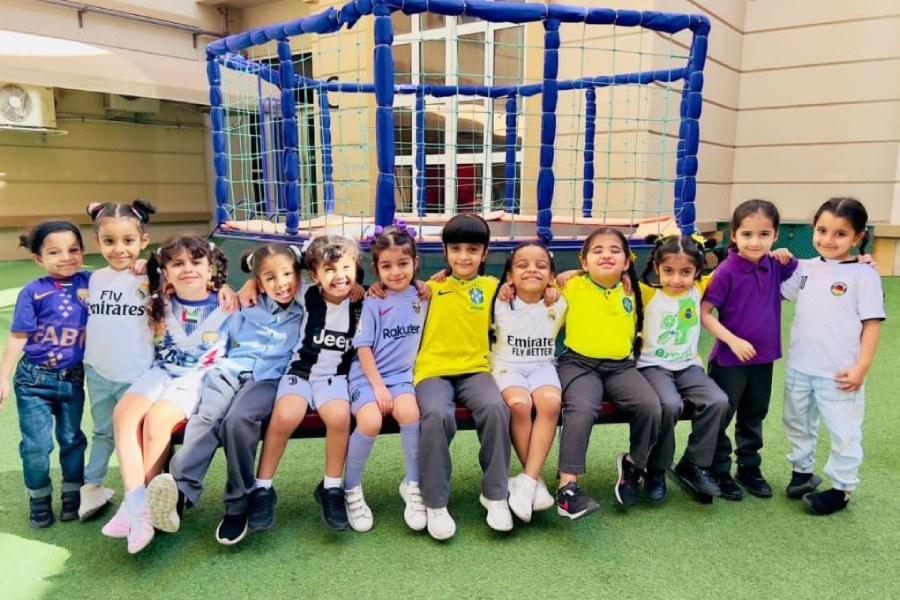
In Ajman’s rapidly evolving education landscape, the question is no longer where a child studies, but how early educational choices compound over time. For Indian expatriate families navigating kg schools in ajman, the decision between curricula, pedagogy, and school culture is effectively an investment portfolio—one whose returns unfold over decades, not academic years.
The Economics of Early Learning: ROI Beyond the Classroom
Early childhood education is increasingly framed through the lens of return on investment (ROI). Global evidence suggests this framing is not only valid but necessary. According to longitudinal research, involvement in organised early education increases high school completion rates by 11.4 percentage points while lowering grade repeat and special education placement. According to the OECD, by the time they are 15 years old, pupils who attended pre-primary school outperform their peers by the equivalent of more than a year of education. To put it another way, the kindergarten curriculum is a predictor of long-term intellectual capital rather than an initial step.
Indian Schools in Ajman: The CBSE Question
Indian schools in Ajman primarily use the CBSE kindergarten curriculum, which is renowned for its methodical, academically aligned growth. The crucial question is whether structure equals long-term worth, even though this offers continuity into higher grades.
Community sentiment in the UAE reflects a growing scepticism about overly exam-oriented frameworks:
“Rote learning sets kids up for failure… self-study and critical thinking matter more later.”
This critique highlights a tension: while CBSE offers rigour and familiarity, the best curriculum for kindergarten ajman increasingly integrates inquiry-based learning, communication skills, and socio-emotional development—factors strongly linked to future employability.
Quality Over Attendance: The Hidden Multiplier
A common misconception among parents is that any early education is beneficial. Research suggests otherwise. The quality of the programme—teacher expertise, curriculum design, and home-school alignment—plays a decisive role. OECD data reveals that once socio-economic factors are controlled, the benefits of early education vary significantly depending on quality. This insight is particularly relevant in Ajman, where a growing number of private Indian schools compete on facilities and affordability. The real differentiator, however, lies in curriculum execution:
- Does the kindergarten syllabus emphasise language development?
- Are problem-solving and creativity embedded early?
- Is parental involvement structurally encouraged?
Without these, early schooling risks becoming a low-yield investment.
The Compounding Effect: From KG to Career
The ROI of early education operates much like compound interest. Small early advantages amplify over time:
Cognitive Foundation → Academic Performance
Children with strong early literacy skills are significantly less likely to struggle later; poor communication skills at age five can quadruple the risk of weak literacy outcomes.
Academic Performance → Educational Attainment
Early education participation correlates with higher graduation rates and reduced academic delays.
Educational Attainment → Career Outcomes
Each additional year of schooling can increase labour income by over 25%, demonstrating the economic ripple effect of early academic pathways.
For families evaluating kg schools in ajman, this trajectory underscores a critical truth: early choices are not isolated—they are cumulative.
The Parent-School Interface: Where ROI Is Won or Lost
Interestingly, research from the UK’s Department for Education highlights that home environment and parental engagement are as influential as early schooling itself.
In Ajman’s Indian school ecosystem, this creates a dual responsibility model:
- Schools must deliver a robust kindergarten syllabus aligned with future skills.
- Parents must reinforce learning through structured routines, reading habits, and emotional support.
The failure of either side creates what educators increasingly call the alignment gap—a silent ROI killer.
Strategic Questions Parents Should Be Asking
To navigate this landscape effectively, parents should move beyond superficial metrics (fees, infrastructure) and ask:
- Does the cbse kindergarten syllabus in this school integrate play-based and inquiry-led learning?
- How does the school measure non-academic outcomes like confidence and communication?
- What is the teacher-student interaction model in early years?
- How does the school involve parents in reinforcing learning at home?
- What evidence exists of long-term student success (university placements, skill readiness)?
These questions shift the decision-making process from cost-based to value-based.
Conclusion: Early Education as a Long-Term Asset Class
Early education is now a strategic asset class rather than a preparatory step in Ajman’s competitive educational climate. Whether this asset increases or decreases over time depends on the interaction of curriculum quality, parental involvement, and institutional philosophy. Finding the environment that gives the best long-term return on investment is more difficult for Indian expatriate families than just choose between KG schools in Ajman. The answer is found in how well a school converts its kindergarten curriculum into future-ready competencies, not just in brand names or legacy curricula. Because, similar to finance, early investments in education frequently result in the most significant returns.

